Voltmat Power
Medical Power Supply technology is becoming more critical as hospitals adopt connected monitors, imaging systems, surgical equipment, and home-care devices. Market research from Grand View Research and MarketsandMarkets indicates continued growth in medical electronics, supported by aging populations, chronic disease management, and remote patient monitoring. Their estimates differ in market size and forecast timing. That difference matters.
The 2026 manufacturer landscape should therefore be assessed beyond revenue or factory scale. Reliable suppliers demonstrate compliance with IEC 60601-1, appropriate means of patient protection, low leakage current, reinforced insulation, and documented risk controls. A power supply operating inside an infusion pump may face heat, vibration, cleaning chemicals, and continuous use. Design experience matters. So does traceability.
This introduction examines leading global Medical Power Supply manufacturers through technical capability, certification evidence, production quality, customization, delivery stability, and after-sales support. Reports from Fortune Business Insights, Research and Markets, and Frost & Sullivan provide useful market context, but published rankings are not always consistent. Some data combine adapters, embedded supplies, and broader medical electronics categories. That can distort comparisons. Buyers should verify test reports, warranty terms, factory audits, and regulatory documentation directly. A polished datasheet is not enough. Real performance is proven under load, temperature, and time. This review aims to identify credible manufacturers for 2026 while acknowledging an uncomfortable limitation: no single public report can fully measure engineering depth, field reliability, or customer support across every region.
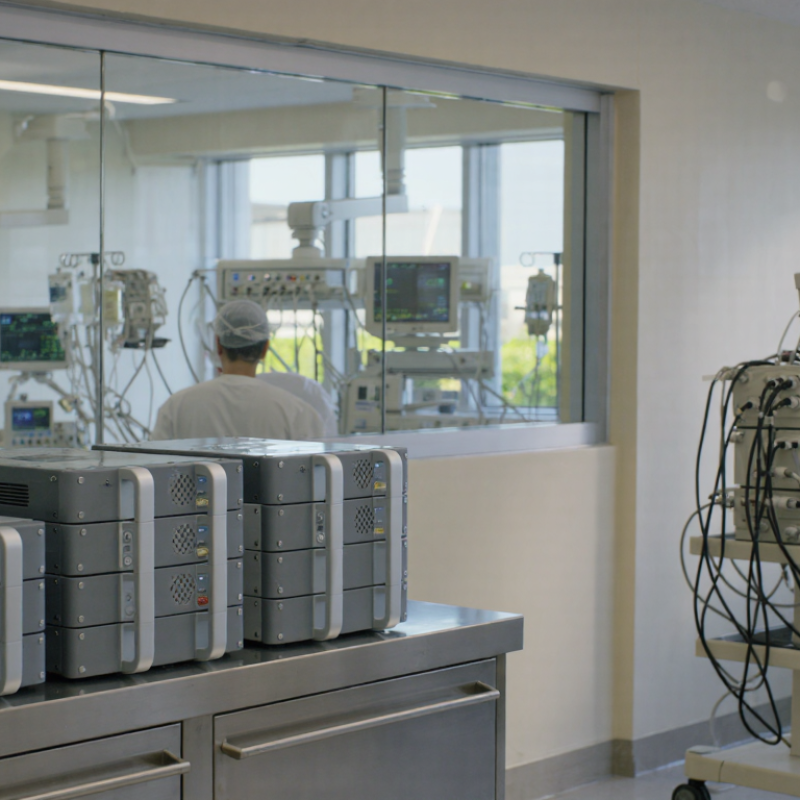
Medical power supply manufacturers design and produce the electrical systems that keep clinical equipment safe, stable, and continuously available. Their products convert mains electricity into controlled power for imaging systems, patient monitors, ventilators, surgical devices, and laboratory instruments. The work is more demanding than ordinary electronics. A brief voltage interruption can interrupt monitoring or delay treatment.
Their role includes circuit design, thermal control, electromagnetic compatibility, insulation, testing, and lifecycle support. IEC 60601-1 defines essential safety and performance requirements for medical electrical equipment, including protection against electric shock and excessive leakage current. Manufacturers must also provide traceable quality records, risk assessments, and repeatable production controls. In practice, engineers test units under heat, vibration, overload, and abnormal input conditions. Small details matter, such as connector locking force and cooling airflow around a sealed enclosure.
The need is substantial. A 2023 WHO and World Bank report, Energizing Health, estimated that more than 670 million people lacked electricity access, while many more depended on unreliable power for healthcare. This places greater responsibility on power supply manufacturers, especially in rural clinics and mobile care settings. High efficiency can reduce heat inside compact equipment, but efficiency alone is not enough. Designers must balance efficiency, isolation, noise, serviceability, and long-term availability. Specifications sometimes look perfect on paper. Field conditions can disagree. Manufacturers that combine documented compliance with real hospital testing offer stronger evidence of reliability.
Evaluating medical power supply companies requires more than comparing output ratings. A reliable supplier should provide evidence of compliance with IEC 60601-1 and relevant EMC requirements. These documents must match the exact model, revision, and intended application. A certificate alone is not enough.
Review electrical isolation, leakage current, insulation strength, and means of patient protection. Ask how the company controls heat, vibration, moisture, and abnormal loads during testing.
Medical devices may operate continuously beside sensitive monitoring equipment, so stable output and low electromagnetic interference matter greatly.
ISO 13485 certification can indicate disciplined quality management, while ISO 14971 practices show how risks are identified and reduced. Check traceability from components to finished units.
Look beyond laboratory performance. Request failure-rate data, production-test procedures, change-control records, and realistic service commitments. Can the supplier explain a failure without hiding behind technical language? That answer matters.
Evaluate documentation quality, response times, repair processes, and long-term component availability. Some suppliers present impressive specifications but offer weak evidence for field reliability. That deserves caution.
I would also inspect samples under load, not only review spreadsheets. A supplier may pass formal tests yet communicate poorly during a design change. This is an easy detail to underestimate. Reliable evaluation combines standards, measured results, manufacturing discipline, and transparent technical support.
In 2026, leading medical power supply manufacturers worldwide are evaluated beyond price and output ratings. Their products must support patient safety, equipment reliability, and long service life. Experienced manufacturers design around IEC 60601-1 requirements, electromagnetic compatibility, and risk management practices. They also document insulation, leakage current, thermal behavior, and abnormal operating tests. These records help hospitals and original equipment manufacturers make informed decisions.
Details matter in real clinical environments. A power supply may operate continuously inside an imaging system, patient monitor, or surgical device. Stable output under changing loads is essential. Low fan noise can also improve comfort in quiet wards. Small details matter. Manufacturing quality depends on controlled assembly, component traceability, burn-in testing, and consistent inspection. A supplier with strong engineering support can adjust cooling, connectors, or isolation distances without weakening compliance.
However, published specifications do not reveal every weakness. A product may pass laboratory tests yet perform differently after years of heat and vibration. I would examine field-failure data, repair procedures, and availability of replacement units. Independent certification is valuable, but it does not replace production audits. No manufacturer is flawless. Even mature suppliers can face component shortages, redesigns, or communication gaps. The strongest global manufacturers acknowledge these risks and explain their corrective actions clearly. That honesty often says more than a polished brochure.
Medical power systems in 2026 are divided into several practical product categories. Internal AC-DC supplies serve imaging equipment, patient monitors, surgical systems, and laboratory instruments. External adapters support portable devices and simplify replacement during service. DC-DC converters regulate power inside mobile equipment, battery systems, and isolated patient-connected modules. Modular supplies help designers scale output without rebuilding the entire electrical platform.
Safety comes first. These systems commonly use reinforced isolation, low leakage-current design, and multiple means of patient protection. Power-factor correction improves input performance, while resonant switching reduces heat and audible noise. Digital monitoring can track voltage, current, temperature, and fault conditions in real time. Medical-grade electromagnetic compatibility filtering is also essential near sensitive sensors. Space remains tight. Compact layouts often require careful thermal paths, shielding, and connector placement.
From engineering reviews, reliability depends on more than electrical ratings. Designers should examine insulation spacing, surge protection, cooling performance, and long-term component stress. Battery-backed systems add charging control and seamless transfer requirements. Wide-bandgap switching devices may reduce size, but they can introduce faster noise edges and harder EMC problems. That trade-off matters. No design is perfect. A quieter prototype may still run hot under continuous load, while a highly efficient unit may complicate service access. Verification against recognized medical safety and EMC requirements should remain part of every development stage, not an afterthought.
| Product Category | Typical Electrical Range | Common Conversion Technology | Isolation and Safety Features | Relevant Standards and Requirements | Typical Medical Applications | Important Design Priorities |
|---|---|---|---|---|---|---|
| External Medical AC/DC Adapters |
Universal AC input, commonly 90–264 V AC, 47–63 Hz Typical output: 5–48 V DC Typical power: 15–300 W |
Isolated flyback, quasi-resonant flyback, or active-clamp flyback Synchronous rectification is often used at lower output voltages |
Reinforced insulation Low leakage current Touch-safe enclosure Optional two-pole or three-pole AC connection |
IEC 60601-1 medical electrical safety IEC 60601-1-2 electromagnetic compatibility Applicable regional efficiency and conducted-emission requirements |
Patient monitors, portable ultrasound systems, diagnostic instruments, infusion equipment, and home-care devices | Leakage current, EMC performance, thermal management, cable reliability, and resistance to repeated plugging |
| Open-Frame Internal AC/DC Supplies |
Universal AC input, commonly 85–264 V AC Typical output: 12–48 V DC Typical power: 40–600 W |
Two-stage architecture using a power-factor-correction front end and an isolated LLC, phase-shifted full-bridge, or flyback converter |
Reinforced isolation barriers Protective earth or Class II construction Overvoltage, overcurrent, short-circuit, and overtemperature protection |
IEC 60601-1 IEC 60601-1-2 IEC 61000-3-2 power-factor requirements where applicable Regional energy-efficiency regulations |
X-ray subsystems, laboratory analyzers, patient beds, medical imaging consoles, and hospital information terminals | Creepage and clearance, airflow, acoustic noise, conducted and radiated emissions, and serviceability |
| Enclosed Medical AC/DC Supplies |
Universal AC input or dedicated 115/230 V AC input Typical power: 100–1,000 W Multiple DC output rails may be available |
Active PFC followed by LLC or other resonant isolated conversion Digital control may be used for monitoring and power management |
Metal or reinforced polymer enclosure Protective-earth connection or double insulation Integrated fan or conduction cooling |
IEC 60601-1 safety classification IEC 60601-1-2 EMC immunity and emissions IEC 61000 series testing as applicable |
Operating-room equipment, medical carts, imaging equipment, sterilization systems, and centralized clinical devices | Patient protection, heat dissipation, fan lifetime, earth leakage, vibration resistance, and accessible-part temperature |
| Medical DC/DC Converter Modules |
Typical input: 9–36 V DC, 18–75 V DC, or other specified DC buses Typical output: 5–48 V DC Typical power: 3–500 W |
Isolated push-pull, half-bridge, full-bridge, flyback, or LLC topologies Non-isolated buck and boost converters are also used for secondary rails |
Functional or reinforced isolation depending on the patient-connected circuit Controlled common-mode capacitance Soft-start and short-circuit protection |
IEC 60601-1 applied at the system level Isolation voltage and leakage limits determined by the required MOP classification |
Battery-powered equipment, ambulance systems, mobile carts, patient monitors, and isolated signal-processing assemblies | Input transients, isolation capacitance, efficiency, voltage regulation, magnetic-field emissions, and thermal derating |
| Medical-Grade Battery Chargers |
Common battery systems: lithium-ion, lithium iron phosphate, nickel-metal hydride, and sealed lead-acid Typical charging power: 20–1,000 W |
Constant-current/constant-voltage charging Buck, boost, buck-boost, or resonant isolated conversion with battery-management communication |
Battery reverse-polarity protection Cell-temperature monitoring Overcharge, overcurrent, short-circuit, and thermal protection |
IEC 60601-1 for medical equipment integration IEC 62133-2 for applicable portable rechargeable cells Battery transport and regional product requirements may also apply |
Portable ventilators, defibrillators, transport monitors, powered wheelchairs, surgical systems, and emergency devices | Battery chemistry, charging profile accuracy, thermal runaway mitigation, cycle life, charging time, and fail-safe behavior |
| Uninterruptible Medical Power Systems |
Single-phase or three-phase AC input and output Typical capacity: 500 VA to several hundred kVA Backup duration depends on battery capacity and load |
Online double-conversion UPS, line-interactive architecture, static bypass, and battery energy storage |
Electrical separation where required Battery isolation and monitoring Bypass protection and controlled shutdown |
IEC 62040 series for UPS systems IEC 60601-1 applies to the medical equipment system and its specified power environment Site-level electrical installation rules also apply |
Intensive-care equipment, operating rooms, imaging systems, laboratory automation, and critical information systems | Transfer time, output waveform, battery autonomy, harmonic distortion, maintenance bypass, and alarm coordination |
| Power Factor Correction Front Ends |
Common AC input: 90–264 V AC single-phase or 180–528 V AC three-phase Typical power: above 100 W to several kilowatts |
Boost PFC, bridgeless PFC, totem-pole PFC, or interleaved PFC Often followed by an isolated DC/DC stage |
Input surge protection Inrush-current limiting Overvoltage and brownout detection |
IEC 61000-3-2 limits for harmonic current emissions where applicable IEC 60601-1-2 EMC requirements at the completed equipment level |
High-power imaging systems, laboratory automation, electrosurgical generators, and large clinical platforms | Power factor, total harmonic distortion, startup behavior, switching noise, component stress, and system efficiency |
| Patient-Connected Isolated Power Modules |
Typical low-voltage outputs: 3.3–24 V DC Typical power: 5–250 W Output voltage and isolation depend on the applied part classification |
High-frequency transformer isolation using flyback, forward, push-pull, half-bridge, or resonant conversion |
Reinforced insulation or appropriate means of operator/patient protection Low isolation capacitance Controlled patient leakage and enclosure leakage |
IEC 60601-1 means of protection requirements Applied-part classifications: Type B, Type BF, and Type CF IEC 60601-1-2 EMC testing |
ECG, EEG, pulse oximetry, invasive monitoring, patient temperature measurement, and other physiological measurement equipment | Patient leakage current, dielectric strength, creepage, clearance, common-mode noise, and signal integrity |
| High-Voltage Medical Power Supplies |
Typical output: 1–150 kV DC depending on the application Typical power: hundreds of watts to tens of kilowatts |
High-frequency inverter, resonant transformer, voltage multiplier, and regulated high-voltage rectifier stages |
Multi-layer insulation Encapsulated or oil-filled high-voltage assemblies Interlocks, discharge circuits, arc protection, and shielding |
IEC 60601-1 and equipment-specific medical standards Additional radiation, high-voltage, and electromagnetic compatibility requirements may apply |
Diagnostic X-ray generators, computed tomography subsystems, electron-beam equipment, and certain therapeutic systems | Voltage stability, ripple, insulation coordination, arcing control, radiation compatibility, and service safety |
| LED and Laser Medical Power Drivers |
Constant-current outputs commonly from 100 mA to several amperes Typical power: 5–500 W Output voltage depends on the LED or laser array |
Buck, boost, buck-boost, linear-current regulation, or isolated resonant conversion Pulse-width modulation may be used for intensity control |
Output-current limiting Overtemperature protection Electrical isolation where the optical assembly is patient-connected |
IEC 60601-1 and IEC 60601-1-2 for medical equipment integration IEC 60825-1 may apply to laser products Photobiological safety requirements may apply to optical radiation |
Surgical lighting, phototherapy, dermatology systems, dental equipment, endoscopy illumination, and optical diagnostics | Low current ripple, optical output stability, thermal control, dimming accuracy, EMI, and predictable startup |
| Programmable Medical Power Systems |
Programmable DC or AC outputs Typical power: 100 W to several kilowatts Voltage, current, sequencing, and protection thresholds are software-controlled |
Digital power control, digitally managed resonant conversion, multi-phase conversion, and closed-loop feedback |
Hardware shutdown paths Output-enable control Isolation between communication interfaces and power stages where required |
IEC 60601-1 and IEC 60601-1-2 at the medical-device level Software and programmable-electronics risk controls may be required under the product’s regulatory pathway |
Medical test systems, imaging platforms, laboratory analyzers, automated pharmacy equipment, and development platforms | Functional safety, cybersecurity of connected interfaces, control-loop stability, fault logging, and calibration |
| Cooling and Power-Management Assemblies |
Fan, pump, valve, and auxiliary control outputs commonly range from 5–48 V DC System power varies from a few watts to several kilowatts |
Point-of-load buck regulators, motor drives, fan controllers, hot-swap circuits, and load-distribution modules |
Overcurrent protection Redundant cooling control where loss of cooling could create a hazard Galvanic isolation where required by the medical system architecture |
IEC 60601-1 risk-management and safety requirements IEC 60601-1-2 EMC requirements Equipment-specific thermal and mechanical standards may apply |
Ventilators, laser systems, imaging equipment, anesthesia machines, and high-power laboratory instruments | Thermal runaway prevention, fan-failure detection, acoustic noise, airflow monitoring, and graceful fault handling |
In 2026, medical power supply manufacturing is moving toward quieter, smaller, and more efficient designs. Hospitals want equipment that consumes less energy without sacrificing electrical stability. Demand is rising for supplies that support portable monitors, imaging systems, robotic devices, and networked bedside equipment. Thermal performance matters too. A compact unit that runs hot may shorten component life in crowded clinical rooms.
Healthcare equipment makers should examine more than output voltage and price. Verification against IEC 60601-1, electromagnetic compatibility requirements, and relevant risk-management processes deserves careful review. Ask manufacturers for test reports, insulation details, leakage-current data, and failure-rate evidence. Check whether the supplier can maintain stable production across multiple facilities. Traceable components and controlled change management reduce unpleasant surprises during certification.
Service capability can decide the purchase.
Engineers should inspect response time, spare-part access, warranty terms, and technical documentation. A supplier may offer impressive laboratory results but weak field support. That gap becomes painful when a ventilator or patient monitor stops working at midnight. I would also assess overload behavior, fan noise, connector strength, and performance after repeated thermal cycles. Not every selection checklist catches real hospital conditions. Prototype testing with the final enclosure is essential, although teams sometimes skip it under schedule pressure. That shortcut can expose hidden airflow problems later. A practical review should include maintenance staff, compliance specialists, and clinicians who understand daily equipment use.
They design systems that convert mains electricity into controlled power for clinical equipment.
A short voltage interruption can stop monitoring or delay treatment.
They should manage insulation, leakage current, electromagnetic compatibility, thermal control, and electric shock protection.
Engineers may test overloads, heat, vibration, abnormal input, and repeated thermal cycles.
No. Higher efficiency can reduce heat, but it cannot replace isolation, low noise, serviceability, or stable output.
Request safety test reports, electromagnetic compatibility results, insulation details, leakage-current data, and failure-rate evidence.
Review response time, spare-part access, warranty terms, and technical documentation.
The final enclosure can change airflow, temperature, noise, and connector access.
Engineers, compliance specialists, maintenance staff, and clinicians should review the power system together.
Medical power supply manufacturers play a vital role in healthcare by designing and producing reliable power solutions for diagnostic, monitoring, therapeutic, and laboratory equipment. This article explains how these manufacturers support patient safety, equipment performance, and operational continuity through stable power conversion, isolation, protection, and energy management technologies. It also introduces key evaluation standards, including electrical safety, electromagnetic compatibility, efficiency, thermal performance, durability, quality control, regulatory compliance, and long-term technical support.
The global market in 2026 is shaped by growing demand for compact, energy-efficient, low-noise, and digitally monitored power systems. Major product categories include external adapters, embedded power modules, battery charging systems, modular supplies, and backup power solutions. Healthcare equipment makers should consider output stability, system integration, environmental conditions, maintenance requirements, customization capabilities, production consistency, and total ownership cost when selecting a supplier. These factors help ensure that medical devices remain dependable, adaptable, and safe throughout their service life.
