 Voltmat Power
Choosing a Constant Current Power Supply from China requires more than comparing wattage and price. The correct unit must match the LED load, voltage range, operating environment, and required protection level. A 700 mA driver may appear suitable, yet it can fail when the LED string voltage changes during thermal cycling. Small details matter.
Industry data reinforces this need. The International Energy Agency reported that data centres consumed about 460 TWh of electricity globally in 2022, with demand potentially exceeding 1,000 TWh by 2026. This growth increases pressure on power conversion efficiency, thermal management, and equipment reliability. Meanwhile, the U.S. Department of Energy continues to identify efficient LED systems and quality drivers as important factors in reducing lighting energy consumption. These reports do not select a supplier for you. They clarify the performance standards your purchase should meet.
A reliable sourcing process begins with technical evidence. Request datasheets, efficiency curves, load regulation figures, ripple measurements, and protection details. Check whether the manufacturer supports IEC 61347 requirements or relevant regional certifications for your target market. Ask for samples before placing a production order. Test them at minimum and maximum input voltage, under full load, and inside a realistic enclosure. Examine connector quality, fan noise, heat rise, and start-up behavior. Factory photographs are useful, but they are not proof. A polished website can still conceal weak quality control. I have learned that the cheapest quotation is often incomplete. Warranty terms, aging tests, component brands, and traceable inspection records can change the real cost. Choose the supplier that can explain its numbers clearly, not merely promise them.
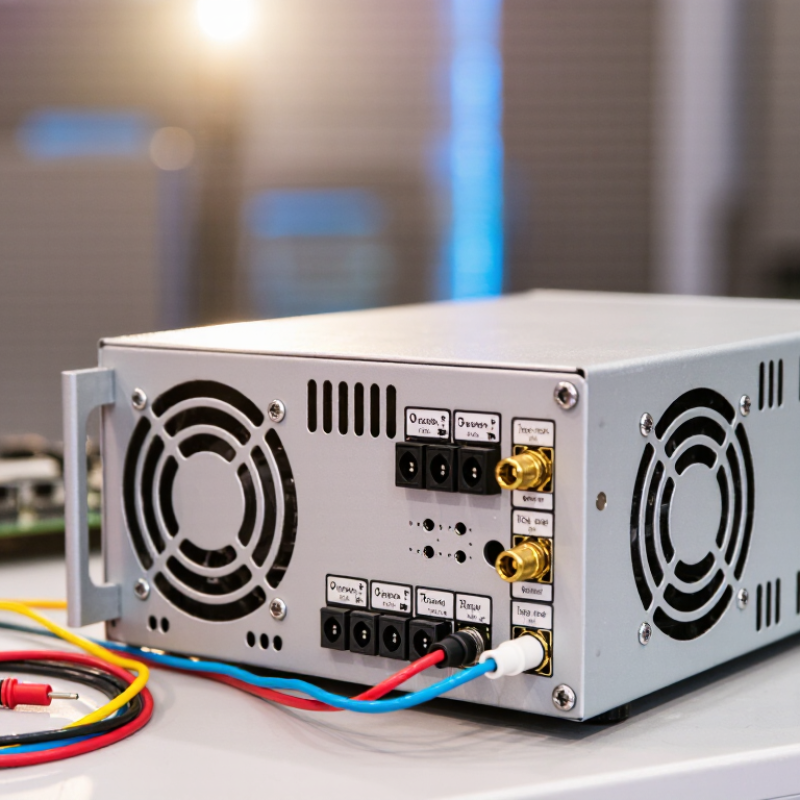
Constant current power supplies protect LEDs by keeping output current stable, even when load voltage changes. This matters because excessive current can create heat, color shifts, and early LED failure.
A typical switching driver rectifies AC input, stores energy, and regulates output through feedback control. Linear drivers are simpler, but they usually waste more energy as heat. Switching types offer better efficiency and suit higher-power lighting.
The main types include AC-DC drivers, DC-DC converters, programmable units, and dimmable models. The U.S. Department of Energy reports that advanced LED packages can exceed 200 lumens per watt in laboratory conditions.
That efficiency still depends on thermal design and driver quality. Grand View Research valued the global LED lighting market at about 78.8 billion dollars in 2023, showing why reliable drivers remain important.
In Chinese sourcing, check input range, rated current, voltage compliance, ripple, efficiency, and operating temperature.
A low price can hide weak capacitors or incomplete test records.
Tips:
Request a sample and test it for eight hours under full load. Check current with a calibrated meter, not only the seller’s label. Ask for safety reports, EMC results, traceability, and production inspection records.
IP ratings also need careful reading; IP65 does not mean every cable connection is waterproof.
I have found specifications can look complete while surge performance remains unclear. That is a point worth questioning.
It keeps output current stable when the LED load voltage changes. This helps prevent heat, color shifts, and early LED failure. Stable current matters.
It rectifies the AC input and stores energy inside the circuit. Feedback control then adjusts output current continuously. The process is controlled.
Linear drivers use simpler circuits but often release more energy as heat. Switching drivers usually provide better efficiency for higher-power lighting. Heat still needs attention.
Common options include AC-DC drivers, DC-DC converters, programmable units, and dimmable models. Match the type to input power, LED voltage, control needs, and installation conditions. There is no universal choice.
Check input range, rated current, voltage compliance, ripple, efficiency, and operating temperature. Also review thermal protection and surge performance. A low price may hide weak capacitors or missing test records.
Request a sample and run it for eight hours at full load. Measure current with a calibrated meter, rather than trusting the printed label. Test low input voltage and high ambient temperature too. That exposes weakness.
Request production records, factory photographs, business documents, and recent audit reports. Check component batches, calibration dates, burn-in hours, and final inspection results. Ask how failures are isolated and documented. Screenshots are not enough.
Request relevant market-compliance documents and verify certificate numbers with the issuing organization. Confirm warranty terms, spare-parts availability, repair procedures, and response times in writing. A copied certificate proves little. I learned that late.
No. An IP65 rating does not make every cable connection waterproof. Inspect connectors, cable glands, seals, and installation instructions separately. Small gaps can matter.
Be cautious when specifications look complete but surge tests remain unclear. Vague answers, selected reports, inconsistent wiring, and missing traceability are warning signs. I once trusted a clean sample too quickly. That was a mistake.
Choosing the right Constant Current Power Supply from China requires a clear understanding of your application, load behavior, and operating environment. This type of power supply delivers a stable current to protect devices such as LEDs, battery systems, and specialized industrial equipment. Before contacting suppliers, define key specifications including output current, voltage range, power rating, efficiency, control method, protection functions, input requirements, and installation conditions. Matching these details with your application helps prevent overheating, instability, and premature component failure.
When evaluating Chinese manufacturers, review their production experience, certifications, quality-control procedures, testing capabilities, and ability to provide reliable technical documentation. Compare quotations based not only on price, but also on customization options, sample testing, production consistency, warranty terms, delivery schedules, and after-sales support. A dependable supplier should communicate clearly, verify performance before shipment, and offer practical solutions for special requirements. By balancing technical compatibility, manufacturing quality, total cost, and long-term service, buyers can select a safe and efficient power supply for their specific project.
